
What Happens When You Plead Guilty in Singapore: Your Rights and Consequences
Choosing the path of pleading guilty in Singapore can feel like a heavy weight is finally lifting, but it is a legal decision that carries permanent consequences for your future.
We’ll break down exactly what to expect in court, ensuring you understand your rights and how to strategically present your case to seek the most lenient outcome possible.
(100% Free & Confidential)
As Seen On:

What Does Pleading Guilty Truly Mean?
In the Singapore legal system, pleading guilty is a formal and solemn admission of the “Statement of Facts” (SOF) presented by the Prosecution.
This isn’t just a “yes” or “no” answer; it is a strategic legal move where you admit to the specific elements of the criminal charge in exchange for moving directly to the sentencing phase.
By pleading guilty, you waive your right to a full trial. This means the court will no longer hear evidence about your guilt or innocence, but will instead focus entirely on what your punishment should be.
This is the first step in sophisticated damage control, halting the public trial process and shifting the focus to your character and mitigation.
How to Plead Guilty in Singapore
Step 1: The Initial Court Mentions
Your journey begins with “mentions”, brief court sessions where the status of your case is updated. These typically take place at Court 4A or 4B of the State Courts. During these sessions, either you or your criminal defence lawyer will appear before the Judge to manage the administrative timeline of your case.
Step 2: Understanding Your Legal Options
At the mention, the Judge will formally ask if you intend to claim trial (contest the charges) or plead guilty. This is a critical crossroad. The court allows for adjournments specifically so you can seek comprehensive legal advice to ensure you aren’t making a rushed decision.
Step 3: Engaging with the Prosecution (AGC)
Before officially entering a plea, there is an opportunity for “Representations.” This involves sending formal letters to the Attorney-General’s Chambers (AGC). The goal is to highlight unique facts about your case or personal circumstances that might persuade the Prosecution to reduce the charges, drop certain counts, or agree to a specific sentencing position.
Step 4: Formalising Your Decision
Once you have weighed the evidence and the law, you must inform the Court of your final decision. If you choose to plead guilty, your lawyer will notify the Judge, and a specific date will be set for the “PG (Plead Guilty) Hearing.”
Step 5: Drafting the Mitigation Strategy
Between the mention and your hearing, your defence team will prepare a Mitigation Plea. This document is filed with the Court and serves as your primary tool for seeking leniency by presenting a balanced view of your character and the circumstances surrounding the incident.
Step 6: The Plead Guilty (PG) Hearing
During this hearing, the charges and the Statement of Facts (SOF) are read aloud. It is vital that the SOF is 100% accurate. If there are details you disagree with, they must be addressed now. Disputing material facts at this stage is crucial to ensure you are not sentenced based on an incorrect version of events.
Step 7: Final Acceptance and Sentencing
If the Court is satisfied that you fully understand the consequences of your admission and that your plea is “unreserved,” the Judge will formally convict you. The Court will then consider the Mitigation Plea and the Prosecution’s submissions before pronouncing your sentence.
How to Plead Guilty Online for Minor Offences
For certain minor offences, the Singapore legal system allows for a more streamlined process known as pleading guilty electronically.
While this may seem like a simple administrative task, similar to paying a fine, it is still a formal criminal conviction. Before you press ‘confirm’ on a screen, it is vital to understand that the record created is just as permanent as one handed down by a Judge in a physical courtroom.
If you are concerned about how a “quick fix” today might appear on a background check five years from now, professional advice is recommended before proceeding.
Why an Accused May Choose to Plead Guilty
For high-earning professionals and PMETs, the decision to plead guilty is often driven by a need for certainty and discretion.
- The “Plea Discount”: Singapore courts generally grant a sentencing discount for “early pleas” of guilt. This recognises that you have saved the state time and resources, often resulting in a significantly more lenient sentence than if you were found guilty after a trial.
- Limiting Public Exposure: A protracted trial is public. For an avatar like Julian, who is “terrified of his peers” and elite network discovering the arrest, pleading guilty can bring a swifter, quieter resolution to the matter.
- Demonstrating Remorse: An early plea is the most powerful way to show the Judge “genuine remorse.” In our company’s workflow, we use this as the foundation for your Mitigation Plea, arguing that your admission proves you are ready to take responsibility and are a prime candidate for rehabilitation.
- Capping the Costs: Legal fees for a full trial can be astronomical. Pleading guilty allows you to focus your financial resources on expert mitigation and strategic representation rather than months of litigation.
When You Might Reconsider Pleading Guilty
While an early plea has benefits, it is a “Regulatory Guillotine” that cannot be easily undone. You should pause and seek counsel if:
- The Statement of Facts (SOF) is Inaccurate: If the Prosecution’s version of events includes details you did not do, you cannot plead guilty “with reservations.” The court may reject the plea.
- There is a Valid Legal Defence: If you have a legitimate defence (such as private defence or lack of intent), pleading guilty means giving up your chance to be fully acquitted.
- Professional License Risks: For those governed by boards like MAS, SMC, or SILE, a conviction, even with a light sentence, could trigger secondary disciplinary action. We must analyse how the specific wording of your conviction will impact your professional standing before the plea is entered.
What Happens After the Accused Pleads Guilty?
Once the plea is entered and accepted by the Court, the focus shifts entirely from what happened to who you are. The trial phase ends, and the Sentencing Phase begins. This is the most critical window for “damage control.”
The Court will typically follow a specific sequence:
- Recording the Conviction: The Judge formally finds you guilty based on your plea.
- Mitigation and Sentencing: This is your opportunity to present your side of the story, not to deny the crime, but to explain the context and your personal circumstances.
The Role of the Mitigation Plea
The Mitigation Plea is perhaps the most important document in your case. It is a formal submission to the Judge that highlights “mitigating factors”, reasons why the court should exercise leniency.
In our experience, a successful mitigation plea does not just ask for mercy; it provides a roadmap for the Judge to see you as a person capable of rehabilitation. We focus on:
- Your Contributions: Your history of work, family responsibilities, and contributions to society.
- The Context: Any unique pressures or circumstances that led to the lapse in judgment.
- Future Impact: Clearly articulating how a specific sentence (such as a heavy fine versus jail time) would disproportionately affect your ability to support your family or maintain your livelihood.
Can the Court Reject a Guilty Plea?
Yes. The Singapore Courts are very careful to ensure that justice is not just fast, but fair. A Judge may reject your plea if:
- It is “Qualified”: If you say “I plead guilty, but I didn’t actually intend to do it,” the Court must reject the plea and set the matter for trial.
- Lack of Understanding: If it appears you do not fully grasp the consequences of your admission.
What are the possible outcomes of a rejected plea?
If the Court rejects your plea, the case is usually sent back for a “Pre-Trial Conference” (PTC). The Prosecution may then choose to amend the charges, or the case will proceed to a full trial where evidence must be proven beyond a reasonable doubt.
Can You Retract a Guilty Plea?
Retracting a plea in Singapore is difficult and is only allowed in exceptional circumstances. You must prove to the Court that there was a valid reason, such as a fundamental misunderstanding of the law or that you were pressured into the plea. Because the “door” is very hard to reopen once it is closed, the strategy used before the plea is entered is everything.
How Tembusu Law Can Help You
Case Analysis & Strategy
We conduct a thorough audit of the Prosecution’s facts and your personal history. This allows us to identify and highlight the specific mitigating factors that can lead to a more favourable outcome.
Persuasive Mitigation Pleas
We draft professional written submissions that align your background and remorse with established sentencing benchmarks.
Expert Coordination & Advocacy
If your case involves specialised issues like mental health or professional licensing risks, we coordinate with experts to support reports.
Post-Sentencing Support
We handle administrative tasks, such as applying for a sentence deferment, so you have the time you need to manage your family and professional affairs.

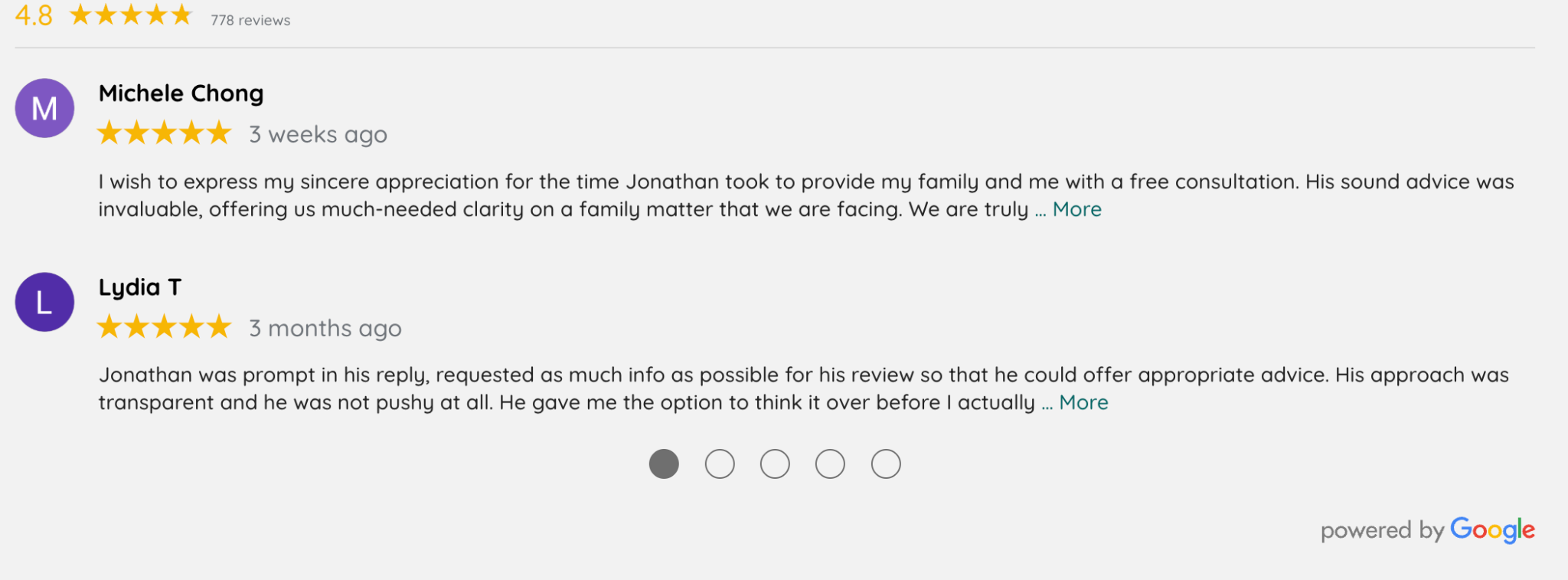
What Our Clients Say
Your First Step: A 100% Free & Confidential Consultation
In your initial 15-minute discovery call, we provide immediate clarity on your situation with three key deliverables:
A Preliminary Case Audit
We listen to the specifics of your charges to identify the most effective legal arguments for your circumstances.
Assessment of Mitigating Factors
We analyse which of the critical factors, such as your level of cooperation or personal background, can be leveraged to seek a more lenient outcome.
Transparent Fixed-Fee Quote
You will receive a clear, all-inclusive quote for our representation. We ensure there are no hidden costs or “open chequebooks,” allowing you to manage your defence with financial certainty.
(100% Free & Confidential)
Don’t Face the Court Alone and Take Control of the Legal Process Before It’s Too Late
Our team is ready to help you navigate the complexities of your sentencing hearing with a clear and proven strategy. The first step toward resolving your case with confidence and protecting everything you have worked for is just one call away.
(100% Free & Confidential)
Frequently Asked Questions About Pleading Guilty in Singapore
Is It Innocent Until Proven Guilty In Singapore?
Yes. Under the Singapore legal system, the Prosecution carries the burden of proof. This means you are presumed innocent until the Prosecution proves every element of the charge against you beyond a reasonable doubt.
What Happens After Pleading Guilty In Court?
Once your plea is accepted, the Judge formally convicts you. The process then moves immediately to the Sentencing Phase. This is where the Prosecution presents your past record (if any) and their requested sentence, while your lawyer presents your Mitigation Plea to argue for the most lenient outcome possible before the Judge delivers the final verdict.
Can I Change My Mind After I Have Pleaded Guilty?
Retracting a guilty plea is very difficult once it has been recorded by the Court. You would generally need to prove that there was a serious error, such as not understanding the nature of the charge or being pressured into the decision.
Will Pleading Guilty Give Me A Permanent Criminal Record?
In most cases, yes. A conviction remains on your formal record (antecedents). However, for certain minor offences and under specific conditions, the record may be considered “spent” after a crime-free period of five years. We can advise you on how a plea will specifically affect your long-term record and any professional background checks.
Does Pleading Guilty Automatically Mean A Lower Sentence?
While the Singapore Courts generally recognise an “early plea” as a sign of remorse, which can lead to a sentencing discount, it is not a guarantee. The final sentence depends on the gravity of the offence and the quality of your Mitigation Plea. Simply admitting guilt is only the first step; the “how” and “why” presented by your lawyer are what truly influence the Judge’s decision.